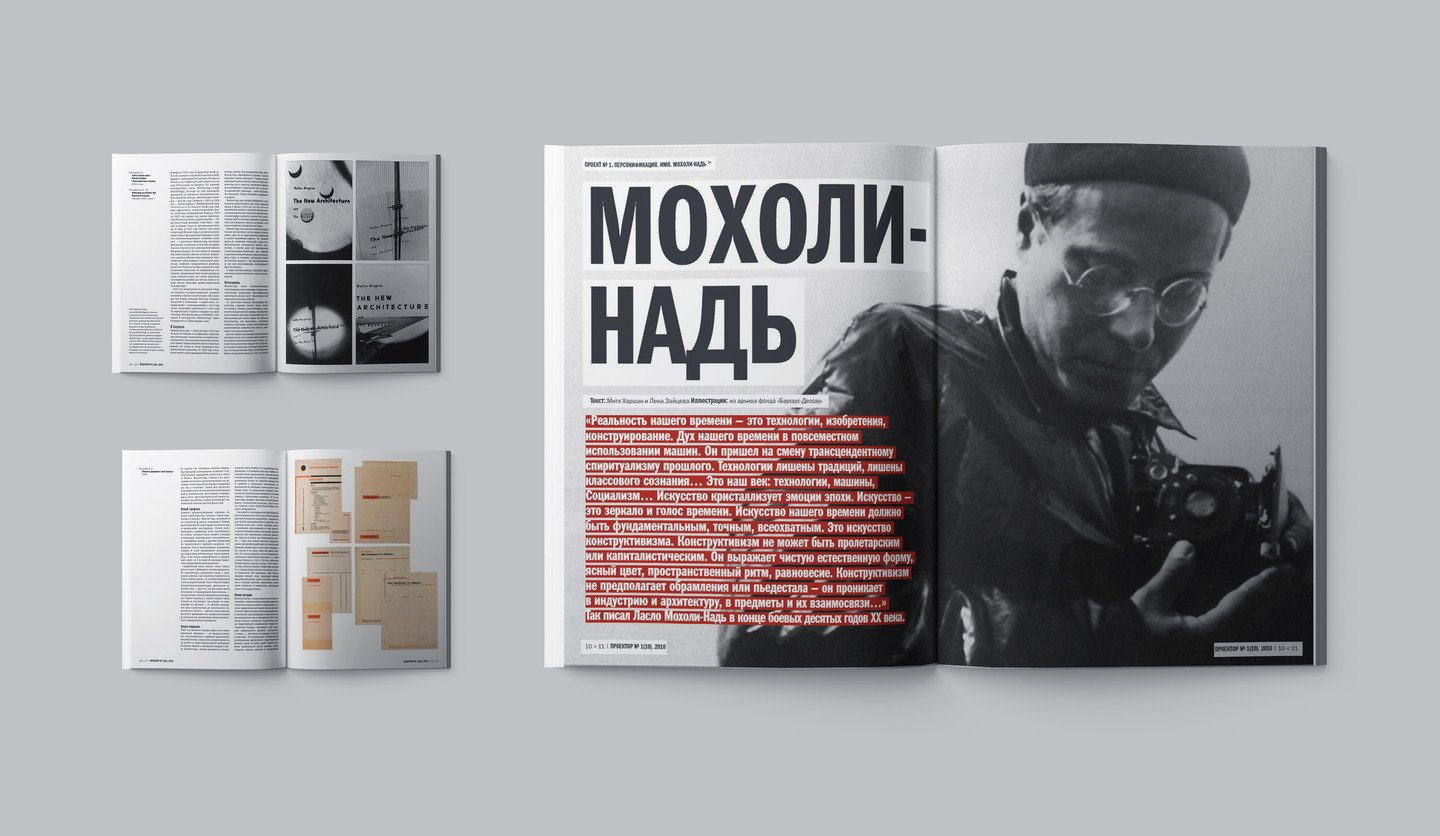
Section «Personification» opens with the publication about László Moholy-Nagy, who wrote for our magazine in early 1920s: «The reality of our time is technology, inventions, design. The spirit of our time is the ubiquitous use of machinery. It replaced the transcendental spiritualism of the past. Modern technology lacks tradition and class consciousness… My century is about technologies, machines, Socialism… Art jells emotions of the epoch. Art is the mirror and the voice of the time. The art of nowadays should be be fundamental, accurate, and comprehensive. This is what constructivism is. It can not be proletarian or capitalist. Constructivism does not require a frame or a pedestal — it penetrates the industry and architecture, objects and their interrelation…»
Since this issue we’re modifying the column «Name», but the change is so significant that it would be better to say we’re starting a new section under the old name. With the first issue of 2010, all publications about the wonderful people of the profession will be designed and typeset by the protagonists themselves. Serge Serov, the member of Projector’s editorial board, has kindly agreed to be responsible for their ideological and text guidance in this «magazine in the magazine». From now on, I’ll just inform our protagonists of the cut size and the number of pages, but the publication design is given at the complete disposal of the masters, who the article is about. Boris Trofimov has become the pioneer of the new section.
«BV, as his students adoringly call him behind his back, generously and unselfishly shares his invaluable creative experience with them. Not only does he immerse the students into the atmosphere of high style and genuine professionalism, but also gives them loads of human attention, sincere care and true love. Love, as you know, „is patient and kind, it does not dishonour others, does not delight in evil, but rejoices with the truth, it always hopes, always perseveres…“ A student of him once remarked: „Boris teaches soulfully“. „OK, OK“, — he says softly about someone being not very fast, „…he’ll do it step by step“. And then you see the student does it», — Serge Serov says about Boris Trofimov.
«Russian design» by Olga and Alexander Florensky shares the project Russian Trophy, featuring a submarine, a helicopter, a triumph arch, and a variety of smaller military objects.
Here is the end of Yuri Gordon’s epic saga on the creation of the type 21 cents, which has taken three issues of section «Lettering». However, the work scale explains both the size and duration of the entire story, which has been Projector’s the ever-largest publication. However, the work on the type doesn’t stop with the end of the article. Yuri: «When I decided I wanted to make about two hundred faces of Cent, I realized that customary means wouldn’t work. Okay, they would, but I’d waste the amount of time. unaffordable for a person of my temperament and interests». Which tools do help to solve this problem? You’ll be able to read this in next issues of Projector. An intrigue? Sure!
The section «Object» this time has only one publication — the story of a ceramic clock by George Nelson. In addition to a large number of wall clocks, he also contributed to a small series of ceramic desktop ones. Designed in the early 1950s, they, for unknown reasons, were never mass produced. Only now, when it has been over half a century since they were invented, they’ve been put into manufacturing once again.
«Environment» section, instead, boasts of quite large-scale publications. Projector could not ignore the unique materials about a home for the collection of Vitra furniture, just opened in February. The stunning building Vitra Haus was designed by the architectural bureau Herzog & de Meuron. We must go and see it live!
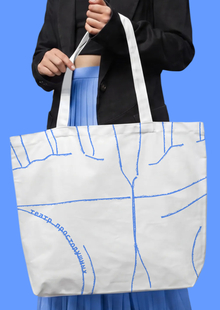
We’ve managed to find one more unique material, but of a different kind, in the archives of Iosif Vaks. This is the project of a comprehensive design of illuminated signs in the main streets of Leningrad. The best features of the old-time pre-computer design culture are now considered as almost pure art due to its elegance of execution, and the attitude to the overall project content.
«Photography» shares the photos and self-assembled cameras of a St.Petersburg photographer Alexander Lyashko. Knowing about Alexanders’ passion to construct and upgrade cameras, friends and friends of friends bring him old photo equipment, which Alexander stores in a fridge. And should design departments of big manufacturers know that, they might employ Alexander as a consultant on ergonomics. For example, Hasselblad takes professional photographers’ advice. However, Alexander hasn’t given any reconstruction and upgrade to his own Hasselblad, well, maybe just a little.
Section «Books» has turned most voluminous this time. Here we have the traditional article by Mikhail Karasik on book history of the 1920—30s. In this issue, Mikhail observes the whole layer of the books «Of paper and steel».
Another historical publication is the interview given by Vladimir Krichevsky to Mitya Kharshak. In January, the member of the editorial board Alexander Florensky made Projector a luxurious gift: he donated a bibliographic rarity, all the five issues of the magazine DA! («Yes!»), published in Moscow in 1994—1996. Alexander then said that once we’d found some space for the fifty-six [kAk) magazine covers, we’d also be able to get it for DA!. DA! , of course, belongs in its own epoch, representing a part of the early modern history of the profession development. On the other hand, the magazine is timeless, as many spreads of it seem to be relevant until now. Mitya Kharshak asked Vladimir Krichevsky, the ideological inspirer and the editor of DA! , the questions of «how it was».
And again Yuri Gordon! His work «Strong gods» has come out, and Alexey Boyko has had the opportunity to be one of the first to hold in his hands the rare edition: «Most of all, it’s surprising that it’s not just the Siamese symbiosis of an „artist’s book“ and a high quality design product, but a literary phenomenon — neither a letter one, nor language, but a verbal phenomenon. Historically, design community has always been eloquent; at least, to a greater extent than artists’ subculture. A designer’s word programs a newborn shape, conjures the very target audience which Yuri mentioned, draws the horizons of utopia — and rarely becomes literature. Yury Gordon, with his usual assertive, strong-willed thinking and a perfectionist’s performance, has constructed a symbolic literary world».